

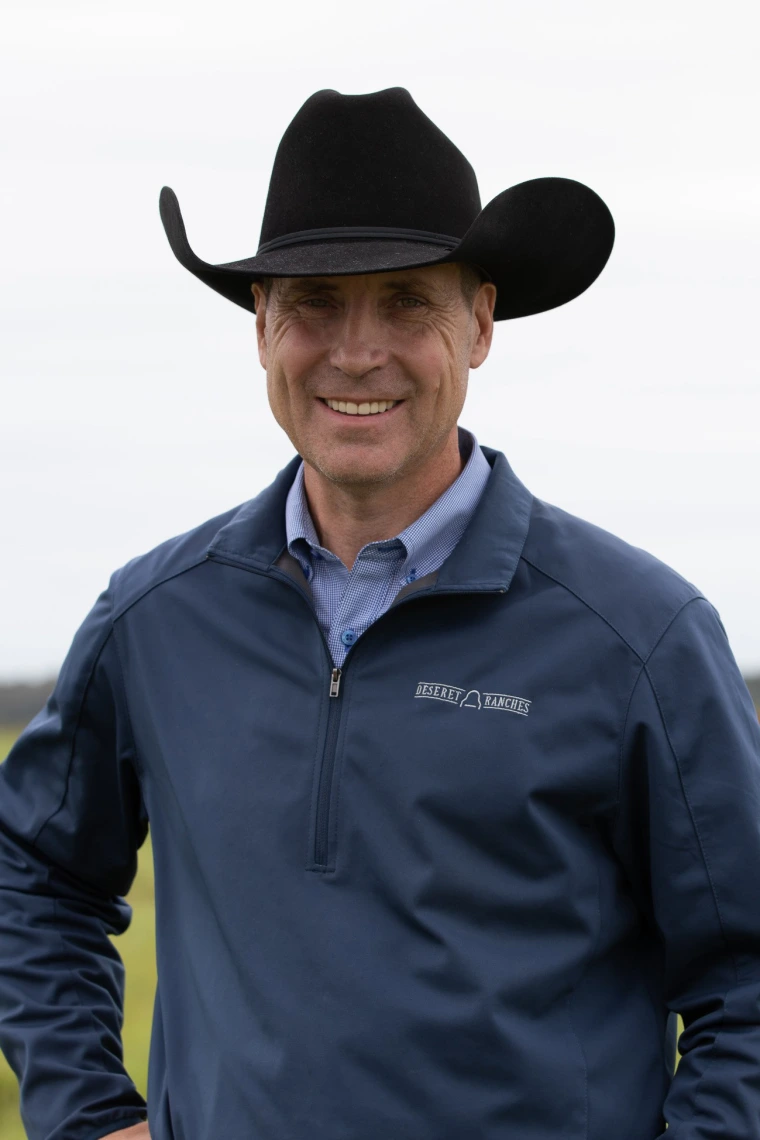
Welcome to the largest cow-calf operation in the United States. Clint Richardson, a graduate of the King Ranch Institute for Ranch Management, is up to the task, even with 45,000 beef cows to care for. Deseret Cattle & Citrus covers nearly 300,000 acres in central Florida from Orlando to the east coast. The ranch was a regional winner of the NCBA's Environmental Stewardship Award back in 2010. Listen to this interview to learn about managing high-production pasture, challenges in fitting animals to a harsh environment, managing lots of animals and people, and conserving habitat with working lands between DisneyWorld and Cocoa Beach.
The Art of Range Podcast is supported by the Idaho Rangeland Resources Commission; Vence, a subsidiary of Merck Animal Health; and the Western Extension Risk Management Education Center.
Music by Lewis Roise.
Transcript
Tip Hudson: Welcome to the Art of Range, a podcast focused on rangelands and the people who manage them. I'm your host, Tip Hudson, Range and livestock specialist with Washington State University Extension. The goal of this podcast is education and conservation through conversation. Find us online at artofrange.com.
Tip Hudson: Welcome back to the Art of Range. My guest today is Clint Richardson at the Deseret Ranch in Florida. We got connected by Rick Mason because you're a graduate of the King Ranch Institute. Not that many people have come through the King Ranch Institute. How did so, welcome. Thanks for having me.
Tip Hudson: It's a pleasure to visit in person at your place in Florida. How did you end up at the King Ranch Institute and working for the Deseret as a ranch manager?
Clint Richardson: Yeah, well, I was in the second class and I started down there in 2005. And so there's one class ahead of me at the inaugural class and then was actually here at Deseret as a unit manager, had been here for about five or six years and really, Paul Geno and Chip Ramsey approached me and said, if we feel like you have some potential, would you have any interest in going back to grad school? At that point, I don't know that I really grad school wasn't necessarily on my radar. I mean, I love being close to the cattle and working as a unit manager. The unit managers here is a pretty unique position. You have about 3,000 cows. You have three or four men. You have 30,000 acres. It's a big system. Very rewarding. But my wife and I prayed about it and thought about it. It's super hard to leave. I mean, this is such a special place and was the place that we started out of undergraduate. I graduated with an undergraduate in animal science in 1998 from the University of Kentucky. There in Lexington and then came straight down here. I had my major professor was Fred Thrift, and coincidentally, he'd gone on a tour I didn't even really know much about Deseret down here and he'd gone on a tour and said I was just down there at Desert Cattle and Citrus and really feel like you would be a good fit there, feel like you ought to apply and so we applied and got the job. They took a chance on us, I guess, and we lived way down long ways from this office, way down, probably as far from this office on the ranch as you can get and started out as a cowboy and had great mentors and great, great opportunities to work with great people and great resources. I always say this company, we have great properties. We have great people, and we work for great purpose.
Tip Hudson: Yeah. That's really interesting. Part of what I think is interesting here is that this is a big ranch, even for a western landscape with a lot less forage density, but it's really big in Florida.
Clint Richardson: Yeah, for sure.
Tip Hudson: I was looking at the map. The amount of ground that you guys cover is amazing for this part of the world. Then I saw on the website that you run around 42,000 head of cattle. Is that still about right?
Clint Richardson: Yeah, we're 40-45 thousand. Yeah.
Tip Hudson: How big is the ranch?
Clint Richardson: We're at 300,000 acres is the number of acres that we have, and it really just sits right here in a pretty unique spot between Melbourne and Coco Beach and Orlando and Disney to the west. It's certainly like you say, a very unique spot, particularly to have a property of this size in this particular area.
Tip Hudson: This Florida has a long history of ranching, and somebody told me a while back that at one point, not that many decades ago, Florida had more mother cows than any other state in the country, I think. Do you know any of that history?
Clint Richardson: Yeah, I don't know a ton of it. But yeah, that's, I mean, we've been around for 500 plus years we've had cattle in Florida, yeah, I had always heard that there was a time when Florida for sure, East of the Mississippi had more cattle than anybody for a long time there. I think urban pressure and urban encroachment has reduced that cow herd over time. But yeah, certainly a very, very prominent part of the agricultural industries here in Florida, really, really powerful state in terms of cow just mother cow numbers.
Tip Hudson: What is the history of the ranch? How did it come to be?
Clint Richardson: Yeah, there was our owner was the church was looking to invest in agricultural properties and had come. There were some missionaries that had come down and had seen some of these big tracts of land here that was really just cut over timber ground back in the 50s and had said we can get it pretty cheap. We feel like we can turn this into a ranch and so they came down and were able to piece together. Well, really piece together in not too many purchases, really the ranch as it is today. I think the ranch. I don't know the exact number, but I can't remember the exact number, but just a few purchases got us to the 300,000 acres. We've made a few over since 2000, but it's been more small block up pieces.
Tip Hudson: What was the cutover timber? Was that owned by private timber companies either Pine Forest that got?
Clint Richardson: It would have been native timber that just flat woods pine ground that would have been that would have been harvested, and then we were able to come in and really change you so I change it over from timber ground over to pasture. A lot of it was just scrub oak, really rough ground.
Tip Hudson: Would that have been the native vegetation?
Clint Richardson: Yeah, it would have been Palmetto flats, Orcamics, some native pine cypress ponds. You've really got a really, very, very diverse eco, set of ecosystems here, a very, very diverse landscape in terms of variety and species and both of wildlife and of plant material.
Tip Hudson: It really is a place of contrast, as I was here once before about 20 years ago, and I just got in yesterday, but it appears that nearly every square foot of ground is either cities, It's paved over. It's got subdivisions or there's intensive farming like citrus or it's cattle or it's some wildlife preserve. Yeah. Seemingly not a lot of other options. It also to that end, it looks like most of what is functional habitat is probably on these ranches, if it's not a preserve. Am I reading that correctly?
Clint Richardson: I think that's probably right. I think the ranches here really certainly play a unique role in preserving wildlife corridors, habitat and that's super important to us as we look at our sustainability model, as we look at the future of the ranch for the next, we have a long planning horizon for the next 50 plus years, there will be big chunks of this ranch that will be in preservation, that will be a part of a part of that wildlife system in this part of the state that, really maintains connectivity that we're very conscientious about the environmental piece, as well, both from the ranching side and then even the future long term plan for the ranch, because there's no question that we need to be really our philosophy is to be a solution to the region from a water transportation, really habitat standpoint, wildlife habitat standpoint, and we want to be we want to do the right thing on the right places on the ranch, if that makes sense.
Tip Hudson: At the recommendation of a friend, I got the novel Aland Remembered a while back, and it's a really well done book and describes this fictional, but historical narrative or the story of how these cattle got abandoned, I think, by the Spanish from long, long time ago, and then pretty much got run by Native Americans for some time. Then when the government ran the Native Americans off, then you had people after the Civil War moving into the region and just discovering that there were some cows here and put them together and would feed them out and then drive them to the coast to ship them off for food. Is that a more or less accurate account to your understanding of the history infrastructure?
Clint Richardson: That would be my understanding of even some of the stories you hear about this ranch was back, look I there is history and so you hear stories of this ranch actually running 70,000 head and they had multiple breeding seasons, and they had cattle that they would gather they would gather multiple times a year to gather that calf crop and to be able to take calves to market and had multiple breeds and cattle that never got gathered, right, because it was pretty rough and pretty Even back in the 50s you this seemed a lot that way and they tell stories of buying cattle and bringing them out here and those cattle making their all the way back over to Kissimmee because they were going back home after they dropped them off the fences weren't good enough. There's just lots of those stories that were very, very interesting to think about this being a pretty wild place and a pretty interesting place back when they started.
Tip Hudson: On the website, you guys say that you had to change the breed composition. What kind of cattle were here when you took over?
Clint Richardson: Well, there would have been a lot of cracker cattle. A lot of the native Florida cracker cattle. There would have been I mean, they would have probably experimented over time with various breeds. I think the cattle were a composition of there was some Bahman influence, obviously, but they probably didn't have it's almost like what they could get their hands on or how could they continue to stock the ranch? It wasn't a super defined breeding program, wasn't a super defined genetics program. It was really if we can get something here that can harvest this forage. We can have some throughput as far as calves to sell and those types of things. That's my understanding.
Tip Hudson: What does it look like today?
Clint Richardson: Yeah, well, we have really a two breed composite, what we use is Brangus and sembra. All of our cattle are at least a quarter Bahman, and then we have the cemental and angus component, both red and black angus. That really is the cow that really fits this environment the best. Then we obviously terminal as many as we can here on the ranch, which is a few. We're able to put angus bull on top of them and upgrade those calves, but produce all of our own females. This is a genetic center where environmental fit becomes the most important piece, a cow has to be able to to function and get bread at a reasonable cost within our system. Then we go from there and make our genetic selections based around once we get to that environmental fit, then it's marbling tenderness post winning performance, average daily gain, all of those types of things. Very defined, we have our own selection index and internal selection index that we use that we tie out with some we do a lot of embryo transfer, a lot of artificial insemination. To continue to bring new germplasm into our herd. But we have some F1 herds that the biggest pieces for us is to maintain our Bahman percentage so that that adaptability and that individual and maternal heterosis is as high as we can have it while still having an animal that meets the needs of the consumer. It's always that antagonism that exists between adaptability and red meat yield, essentially.
Tip Hudson: What are some of the stresses aside from the obvious ones that you have to accommodate for with breed composition and selection? I mean, heat stress is the obvious one.
Clint Richardson: Yeah, sure.
Tip Hudson: What else is that that you're trying to Yeah, I'm adapted to?
Clint Richardson: I think that would be the primary one. I think lots of bugs. There'd be times when I can remember gathering cattle on this ranch and we literally would go out there before daylight and you'd have your slicker over your head because the mosquitoes were so bad that they would just eat you alive, and you'd really only have to go to one spot in the pasture because the cattle were all hemmed because they've been fighting mosquitoes all night and when we get hurricanes that come through, that mosquito population really big rains in the fall just explodes and so obviously, tremendous parasite loads. Those are huge pieces. We have a very aggressive deworming program and parasite control program because it's wet, long growing season humid, all of those things that contribute to this part of the world has parasites are a huge issue. That would be a challenge, for sure. But other than that, you know, hair, we were part of that adaptability piece. We have to as we bring in outside genetics, we have to watch for hair. Those cattle have to shut off the cattle that don't shed don't last. They just can't they can't hold up and get reasonable production in this environment. That heat stress, obviously, back to heat stress, super critical so we have an aggressive program, where we call on hair length and density.
Tip Hudson: This is strictly a cow calf program, you're shipping wean calves?
Clint Richardson: Yes, we'll ship every wean calves on a truck. We do have a heifer development facility where we develop all of our own heifers and a little bit of a backgrounding scenario where we feed them some corn silage and haylage, and we can run down there if you have time and we'll look at it. But those are really the two components of the ranch, along with all the other things that we do. But on the cattle side, those are those that's what we have. Then we have units where all they will do is calve out yearling heifers. We have two units at that. We try to centralize and really focus so that we have a team of about six guys and ladies that's all they do is calf heifers. It works pretty well.
Tip Hudson: It seems that Florida has a nearly endless appetite for development. In fact, I just saw, I think in the Wall Street Journal last week that Florida is gaining almost as many new residents per day as California is losing. Somewhere in the neighborhood of six to 800 people per day. That keeps development pressure pretty high. There are parts of the West where we've had that for a long time, but that pressure has been here for 100 years. Most ranches, at least the ones that are near the coast, near those cities are sitting on a lot of monetary value. It's worth a lot more in anything but ranching. How do you manage that?
Clint Richardson: Yeah, I mean, we're an agricultural company. We have a long term vision in view. Really back to this being a regional partner, we recognize that really some of the long term, some of the best use of parts of this ranch we'll be in development. We'll be, that final crop of development. But, there will be large pieces of this ranch that will stay in habitat, that will be in, preservation for a long time. There will be parts of it that, in fact, we have planned into the long term plan that's been approved by the state, what's called the sector plan that there will be large parts of this ranch that will be just that habitat or will be agriculture, forever. We're proud of the fact that we're not just chasing that piece of it, that we want to have a balanced approach and really be conscientious and cognizant of what it means for all of the hundreds of wildlife species that share this property for cattle production, farming, ranching, all of the other things we do at the property. Those things are very important that they continue because the highest and best use of parts of this ranch is just that to remain in agriculture or to remain in habitat. It's not just an all out chase $1 amount or $1 figure, but it's more what's the most appropriate sustainable use of the ground for the future?
Tip Hudson: I assume you have multiple, what I would call profit centers or enterprises here, besides just cattle, Clay Warden, who you might know, lives up in Christmas. He's a Ranch financial advisor. We did a series of podcast interviews a couple years ago with Clay, and he said one time that you've got to lay your value on your dirt and find other ways to generate some revenue or at least, capitalize on some value aside from just selling calves. What are some of the other ranch enterprises here?
Clint Richardson: Yeah, I think this part of the world is super unique from that perspective, because, we would have obviously, we lease nearly every acre for wildlife for use on the wildlife side, hunting plus really what we would call recreational, more just so people have a place to come to spend time with their families, to experience nature.
Tip Hudson: Yeah.
Clint Richardson: There is a component of population management that goes with that, right, in terms of the deer and the turkey and the feral hog populations. That's one really enterprise that we have or profit center that we have. We have sold, leases and where we have pivots, where we water sold. We have a little bit of citrus left. We've struggled for a long time with the citrus, and we're almost out of the citrus business. Well, we've got a few hundred acres left. We've got dirt and shell pits. One of the unique things about this part of Florida is there's, this used to be an old shoreline, right? East of the ranch here, and there's a big vein of fossilized seashell that we can mine, and it becomes road base and we can generate revenue. Then that becomes really a feature that enhances the value of the surrounding property. It becomes a water feature. We have that. We do have some solar on the ranch. We have several thousand acres of solar fields on the ranch that really push power onto the grid to provide power again, back to our being part of the solution for the region. We have bee leases. They don't make a lot of money, but super critical to the ecosystem and the environment.
Tip Hudson: I saw some of those. I think along your southern edge, I drove nearly over to Well Dove to Melbourne and then came right back.
Clint Richardson: Yeah.
Tip Hudson: Saw some bees out there.
Clint Richardson: Yeah. We have that. Those would be the main ones. We do harvest some timber still, some native pine, and we do harvest some cypress, too. Really, that's, those are revenue sources for us, but they're also really doing a really good job of managing all of those enterprises within the framework of the best management practices for the state. Really, it's our obligation or opportunity to operate this ranch in the most sustainable way. As we follow the BMPs, the state best management practices for each of those enterprises, we're able to capture some value, but also to manage the ecosystem at its highest, what I would say is at its highest carrying capacity.
Tip Hudson: Yeah. I'm totally ignorant about citrus. I'm aware that, that came in a long time ago. But what's the problem with Citrus now? Is that there's just oversupply?
Clint Richardson: No, not at all. I mean, I think it's more, you've got a lot of challenges. One of the challenges we have is we're pretty far north, and so we get pretty cold. Every so often, we'll freeze, and that creates an interruption in the production cycle. We have Citrus Canker, we have greening disease. It's super competitive with the Brazilian markets.
Tip Hudson: Right.
Clint Richardson: Then us being as far north as we are, the other problem you have is hurricane and so every time a hurricane blows in, we have fruit drop, we have, introduction of various biological diseases or whatever. It's just these disruptors to the production cycle, and Citrus tree is pretty sensitive. We've just, and really they're a good user of water. It's preserving that agricultural water that's important too. We found other ways to do that. Part of that is producing silage to feed the heifers to utilize that water.
Tip Hudson: I mentioned that it looks like the ranches are providing a lot of habitat. You have said that managing habitat and managing for wildlife is one of your focus areas. Are there particular wildlife species that are in greater need of functional habitat or larger contiguous chunks of habitat that you're targeting?
Clint Richardson: No, not necessarily. I mean, they would be both game and non game species, but I don't know that we're, I think we want to do the right thing, generally speaking across the ranch and let that benefit come to whatever species might be native to here or might be a game species, that's here as well. Not anything particular.
Tip Hudson: Yeah.
Clint Richardson: But just, an overarching sustainability model.
Tip Hudson: Yeah. I like that means based approach. Wildlife are a little bit fickle. If you manage for one thing, and then that's not what happens to end up there, is that a success or not?
Clint Richardson: Yeah. You've narrowed the scorecard a little bit, and it gets tougher to measure success.
Tip Hudson: But how do you know if you're getting it right? When you say you manage certain areas for habitat, what does that entail?
Clint Richardson: Well, I mean, I think.
Tip Hudson: There just like rotational grazing that sort of maximizes species diverse?
Clint Richardson: Yeah, I think so. I mean, I think a lot there's several tools at your disposal. I mean, we do we will do lots of things. Really what if we do things right for the cattle from a grazing perspective and from a forage management perspective, that really, and we've done studies, over the years that really our most productive areas for, for instance, white tailed deer are really the areas where we manage cattle the best from a rotational grazing standpoint, from a recovery standpoint on the forages and the forbs and we do some prescribed burning. We do some chopping and some opening up some travel corridors and some edge, and all of those things that we do that really, we can capture value on both sides of it, generally speaking. Well, even the timber harvest and the thinning so none of it's really clear cutting. It's all thinning and anyway, that all of those things that we do, success is having a population that is healthy and really appropriate for the region. We work very closely with universities very close, we have our own biologists. We have three biologists on staff here that manage all of our populations, both non game and game species. We can track trends of populations and growth and where do we sit with all of those relative to each other? The more feral hogs we have, the more detrimental it is to our fawn recruitment, and so we have to keep them in check. All of those things are really at the charge of our wildlife biologists. We do lots of aerial surveys, lots of drum surveys, wildlife counts, all of those things that we do to really manage a population that shares the same space, essentially as the cattle, right?
Tip Hudson: I think I probably first heard of the desiret from some colleagues that said it was representative of really good grazing management. That would have been some time ago, from before your time. We could call it sustainable, regenerative ecological grazing, pick your buzz word of the day and I would probably define all those a little bit differently. But I'm interested, what does a grazing rotation look like? In our neck of the woods, you know, we get 8 " of precipitation. A grazing rotation means you graze it pasture once per year, and you come back at a different plant phenological stage the next year.
Clint Richardson: Yeah.
Tip Hudson: But this is a way different environment with subtropical grasses and a pretty long growing season.
Clint Richardson: Yeah, I mean, I think, really, philosophically speaking, we still want to manage recovery. We want to manage. But I think what we've learned over the years is, it's really essentially a monoculture of a couple of subtropical grasses. Warm season grasses that obviously that are, very durable bahia, in a lot of places, it's a weed. Most people hate bahia. Then we have an African grass called Hemarthria limpo grass. Those really become our standing forage for, we stockpile for the, I think one of the things that's unique is we're able to stockpile Hemarthria as a standing haystack for the winter. We don't feed hay.
Tip Hudson: Right.
Clint Richardson: That having to manage some growth on that grass, puts some pressure on how you manage the behea side. For instance, through the summer and fall, and really we would graze all of that year round, but from, say, August to November, we would stockpile Hemarthria. It gets four or five feet tall, and that becomes our standing haystack, right, for the winter when the bahia starts to go quote dormant. There's years where it never goes completely dormant, but day length and heat units that keep it from growing. But, so it really depends on the time of year. But recovery is still important, if we look at the nutrient curve of the grass, it peaks out from its protein content at about 21 days. We really manage both sides of that to say, because it's an improved grass, we can push on it pretty hard. To really optimize production without it being too detrimental to the grass. If we can get our stock density and if we can get our stalking rate right, we can really manage recovery pretty well to where that plant will persist and where we can, and if we can run big enough herds, we can trend away from selective grazing and some of those types of things and get a little more uniform. Really, for us, it's about because those grasses are so resilient and we are, I mean, we run a cow or an animal unit to about 3.8 acres.
Tip Hudson: Yeah.
Clint Richardson: We're really trying to drive intake.
Clint Richardson: If there was a limit to the system, because it is poor quality forage, it's intake. When we get into challenges, we have to supplement in a way, we have to graze in a way where we can optimize intake, which everybody does, but I think it's particularly challenging here when it's such poor quality forage. Mm hmm.
Tip Hudson: People see Florida and you see ocean green grass, but I heard somebody one time call it washing grass. Sometimes not very nutrient dense.
Clint Richardson: Most of the time, not very nutrient dense. But it's a high fiber content. Really, what we always say is is whatever that body condition that cow is when she calves is what you'll have till she weans. You really have to be. There's no spring bump to speak of, at least not big enough to overcome a mistake through the winter and body condition or any of those things. It's challenging, and we spend a lot of time and energy and effort managing body condition and training and making sure that we don't get behind on any of our cows. Anyway, we feed a molasses product that helps drive intake. It's a good combination to be able to feed a liquid that really drives intake and allows us to utilize our pastures effectively.
Tip Hudson: I don't want to throw anybody under the bus, but everywhere around the country, there are grazers that don't use any rotational grazing and you drive by it and you wish you could just get your hands on it and do something it.
Clint Richardson: For sure.
Tip Hudson: What does that look like here? If you were describing that end of the spectrum, is that year round stalking and single pastures truly continuous?
Clint Richardson: No, we would do rotational grazing. Your round rotational grazing, each rotation would typically have three or four pastures so that we can get to that. Really ideally, depending on herd size and obviously, stalking rate and those things. But we would like to get to a once a week rotation every 3-5 days is where we'd really like to be in terms of our rotational grazing system. That really allows that recovery period on the grass for it to get back because it grows so fast in the summertime that that's the sweet spot for us.
Tip Hudson: That's a good answer. But what I was aiming for with the question was, what would bad grazing management look like in this environment?
Clint Richardson: I think obviously set stalking. For sure, set stalking because it's very selective. They'll go right back to that exact same. Grass will grow a 10th of an inch and they'll graze it off again and you can see it around. Set stalking would be would be as bad as it gets, set overstocking, I guess.
Tip Hudson: I'm curious about water. You look on the map, and there's swamps and hammocks and drainage ditches, and there's water going everywhere, pine trees, palm trees, alligators. What is the history of water management here? Was most of this semi wetland or something like a swamp, and it all got drained in between the hammocks and how far back did that get?
Clint Richardson: There'd have been a fair bit of that when we started. There would have been big chunks of the ranch that would have at least needed the ability to drain somewhere. They really went to work. As they developed the pastures, the drainage came with it. When we go on the tour, we can look around and I'll show you some of that. But our founding fathers, so to speak, really started by as they develop these pastures, you start to level the ground, everything drains to the east and so you really start to put in a drainage system that comes with it. That's for sure, we're very grateful today that they did such an excellent job of putting in the drainage the drainage that we do have on the ranch. We're very conscientious about our water management. We have retention reservoirs, we test all the water that leaves the ranch. We always are very conscientious about discharge off the ranch, and we recognize that we have a stewardship or a responsibility to maintain quality clean water. To date, as we've done testing, the water that gets discharged off the ranch is typically cleaner than what's in the river. With our retention reservoirs and our practices our best management practices from where we feed to how we fertilize, to all of those all of those best management practices that we follow allow us to be able to do that.
Tip Hudson: Forgive my ignorant questions. I know in some places those ditch and dike systems can be used both to flood and to drain. Do you ever use them to irrigate or are you mostly using them?
Clint Richardson: We do certain parts of the ranch, in particular, we've designed the systems where we can back water up and we get very dry in the wintertime really from now till March, and that really becomes our ability to grow winter annuals for young cattle. We have areas of the ranch, particularly those areas that you referred to that were a little more swampy, that were a little wetter, a little better soil. We can flood those and guarantee a rye crop or a and so that we can maintain body condition on those young cattle. That's really how we use it, so we can put boards in a culvert and backwater up. We have hundreds of artesian wells on that part of the ranch, as well, which allows us to irrigate through the dry season because we typically wouldn't get enough rain to maintain a crop consistently without those artesian wells.
Tip Hudson: Is there a problem with non point source pollution coming off of both crop land and pastures in the area or more not so much?
Clint Richardson: No, really not. None. You've got these natural filters, and you'll see when we go out there, the retention ponds that we have. They've got 30 day retention rate and all of that nutrients really settles out or is consumed by vegetation or aquatic animals or whatever. Then a lot of even these big drainage ditches have a lot of vegetation in them that will pull most of that nutrient those nutrients out. There's really no issues at all. Which is incredible, which is an amazing story.
Tip Hudson: You have a constructed wetland that is for storm water runoff? Did I read that right?
Clint Richardson: Yes, stormwater. We've got several of them. It's for stormwater retention.
Tip Hudson: Stormwaters landing on the ranch?
Clint Richardson: It's for landing on the ranch. Then we have the dike system and the ditch system. It either takes that water to a point where we can pump into that reservoir or it'll gravity flow in in some instances. Mostly pumped in.
Tip Hudson: Where did your ideas about grazing management come from?
Clint Richardson: I think I grew up in both Colorado and Kentucky, and I've ranched in Oklahoma and Texas and here and just been around and been around some guys being tickered and some of those guys. We obviously spend a lot of time training our people on grazing management and trying to understand across the country. In our system, we would have varying degrees, different grazing systems, obviously, relative to the region where we're ranching. But going through the King Ranch Institute was a big part of that and learning, continuing to broaden the knowledge base on different grazing systems. It's really been a combination of all of that experience across the country. I've been very blessed to have ranched in a bunch of different places and had some really good teachers and mentors and some really good laboratories to work with in terms of big ranches in different all the way from West Texas to Oklahoma to here to Central Kentucky to Eastern Colorado. It's been a fun ride, and we try really hard to train our people and go through grazing schools and go through a lot of the savory principles and apply them as best we can in whatever region that we're in.
Tip Hudson: Are there any other mentors that you would specifically call out that were influential?
Clint Richardson: I talked about [inaudible] and Paul Geno and obviously, I was hired here by Chip Ramsey. He was very influential in my career. I've worked with a lot. Barry Dunn, obviously, was the original director of the King Ranch Institute. Has had a tremendous impact on going there as a 32-year-old having worked in I hadn't written an essay for seven or eight years and wasn't particularly good at it then. But just being able to go through that program, lots. We got people like Dave Delaney and Clay Maths and I've had the opportunity. I'm going to miss some. Then we've got one of the really neat things about our company is the general managers that I work with across the country, we've all worked together. Most of us have worked together for 20 years, which is pretty incredible to have that depth of experience together, been through lots of battles. We really doubled our cow herd in our company over a 15 year period. Eric Jacobson obviously would be a great mentor of mine. Probably Eric was probably the most influential that I'd work the closest with throughout my career, but anyway.
Tip Hudson: That's a good list. Some people are critical of these large corporate ranches because they feel like they're just the too big to fail phenomenon. But what I've seen some of the ones in the West is that they're able to experiment with stuff and try stuff out that a smaller owner operator operation doesn't feel like they have the margin to play with. Are there some concepts or approaches or any different angles at ranching that you've been able to experiment with because of the size of this operation?
Clint Richardson: I think certainly you have. I think one of the things that scale gives you is it does give you some leeway in being able to try different feed regimens or different back to your point of grazing or different these Southeastern systems, we've looked at a lot of different opportunities for farming and those types of things, sod programs. I don't even know if I mentioned sod as ours, but some of those types of things where we can say, can we raise sod and then graze cattle during this period and then raise an annual and then have the sod company be able to still harvest? Can we stack this return to using your words? Let's use it as many times as we can. I do think there's a piece to that. But I always go back to our mission statement says that we are an agricultural company that generates long term value. It's a little bit of a misnomer that we don't play by the same rules. We still have to generate a return. That return, there's still competing investment opportunities. Still we have targets that we have to hit. Economies of scale are powerful. But at the same time, I think the biggest challenge for us is to avoid being distracted from our core businesses. I won't share the number, but there's a number of a return that I won't look at it unless it's above this number of what it could generate because the distraction factor is way too big. We get to do all the other things that we do from an enterprise standpoint because we have cattle. I think we have to be careful that we don't get too far away from that, but we have spent time in helping the university develop different cultivars of grasses. The universities we've got a pretty big laboratory here, so to speak, where they can come, and we're already working the cattle anyway. Can they come test this or do this or test a vaccine or an implant or take some DNA samples and map do some genomics mapping or whatever that might be. We can do some of those things pretty easy because we're already here, we're already doing those things. But certainly, we're always looking for additional opportunities to expand that revenue base and, again, continue to do more with what we already have.
Tip Hudson: The flip side is if you try something big and it flops, you lose big.
Clint Richardson: Fail small is for sure something that we try to pound into ourselves. Part of it is we're here.
Clint Richardson: The economics of this, the hard part of experimentation and being really deep into that with partners, is you want to pull the plug before you really get to the answer if the economics don't work. We just have to be conscious of that because it back to the point of we're here to generate that long-term value and generate that return every year.
Tip Hudson: You mentioned that there's several units that are about 30,000 acres apiece. Are there ten of those, and is each one of them a separate closed cow herd, or you do anything different in the different units?
Clint Richardson: No. I mean. They're probably closer to 20. We've got about 15 units. Then they are closed in terms of how we measure production, how we measure the financial return. But they wouldn't be closed, from a standpoint of, we have to stock the ranch. However, they'll always receive heifers from the heifer units. They'll always receive three-year-olds. Then, if we have to shuffle cattle around to get our stocking rate where we needed to be. The number one driver is stocking rate, and so we have to stock the ranch. Therefore, if one unit was to be short pregnants, we would bring pregnants in. In a perfect world, they could be a closed system if they always hit their numbers, but we really don't manage it that way. Part of the reason we don't is because we used to just stack everybody up against each other and say, the unit up by the airport has to compete with the one that's down at the far south end of the ranch, and that was two very different soil types, very different environments. What we've really done now is we've said we're going to take our cow herd as a whole and say, how do we put the right cows in the right spot to optimize production? That's been a fundamental change that's been really good for the ranch, versus saying, everybody's got to take exactly the same thing and compete. Now, because it's really about the overall return, and then the other piece of that is one of the things that's really important to us is to be consistent, and so be efficient and consistent so that if we take somebody from one unit, when they go to the next unit, a lot of the systems are the same. How we feed, how we work cattle, even the structure, the cow pens or the corrals, they're all, really, very similar, how we manage the rotations, how we manage the units, how we do what we do. There's still a lot of flexibility that those guys have to manage their own system. But when you go to that unit, you know what to expect. That's important to us because that's where a lot of the efficiency comes from. We don't have to retrain, restart. Some of it's a safety issue. One of our core values is people development, and we develop our people. Safety is really the most important part of that, is having an exceptionally safe culture.
Tip Hudson: How do you train a crew? Because it's one thing for you to have some idea of what you're looking for, but the guy who's on the ground, moving cows and paying attention, really has to be on board with the philosophy, principles, and practices. How did you achieve that?
Clint Richardson: Sorry to interrupt. We have really deep standard operating procedures, very deep reporting, and inventory systems where those standard operating procedures really become the bumpers on the bowling lane ride. A unit manager has a lot of room in between those bumpers, but no room to go outside of those standard operating procedures. That is what creates some consistency. We train to those procedures. Everybody, hopefully, is planning very well every week because this system is, there's three men running 3,000 cows, and they're working together to do that. It's not like a guy is off on his own, doing his own thing all day, every day. They really work together all the time. That's unique, and that's a little bit different than some other places. That planning and that communication piece is huge. The way our structure is, we have area managers who oversee multiple units. An area manager would oversee five units, and he'd have five unit managers who would oversee a couple of cowboys each. They spend a lot of time out there working, training, and making sure that everybody's clear on the policies and procedures. I think some people would say, that seems like there's not much latitude for management. But there's a ton in there. But we really are able to be efficient and to really optimize the value of the economies of scale by being consistent in our operating procedures. Then we have quarterly trainings where we train on animal handling and welfare, nutrition, BQA. We just had a BQA certification. Every quarter, everybody would be trained in something like that. That's really critical for us, too. That's an opportunity for alignment. That's an opportunity for training and development and helping everybody just continue to be on the same page. That's super important to us. All of our people, including our office staff, are BQA-certified. Which I think that's pretty unique. Most people would say, our cattle crew is, or even our office staff; we feel like that context to the field is super important. We're proud to say, the secretaries, the accountants, everybody goes in.
Tip Hudson: They all know what's going on.
Clint Richardson: All the kids, everybody that gets hired, it's part of our onboarding to be BQA certified.
Tip Hudson: I like that. Maybe going up to a 35,000-foot view, what do you think we've made good progress on in the cattle industry in the last 20 years? Environmental concerns, quality assurance concerns that we've made a lot of progress on?
Clint Richardson: I think consumer demand would tell you a lot of that. Beef quality assurance is, I think, people recognize that it's the highest quality, safest, best product there is. I'm very proud of that. The BQA, Beef Quality Assurance Initiative, has been a tremendous success, and I think we need to champion that more. I think it needs to become more of the standard. Every cattleman in the country should have a desire and want to be BQA-certified and should recognize the value of it. Because the consumer has confidence in our product, in big part because of the way all of that started. I do think we've made significant progress genetically, obviously. I think we've all been pleasantly surprised at how big we can make these cattle.
Tip Hudson: For better, for worse.
Clint Richardson: For better, for worse [LAUGHTER] Exactly. I do think it'll have an impact on how big the cow herd grows back to, or the fact that we can make them as big as they are. But I think that BQA piece, I think we probably don't do a good enough job of championing the fact of how efficient this cow herd has been. We're producing twice as much beef with half as many, whatever those exact numbers are. But it's a huge story of efficiency. Then the other piece I would say, and I think BQA helps with this, too, but people are starting to turn back and say, you think about diet and protein and all of these things. I think we're positioned very well to tell our story in a different way than maybe we have in the past with social media and with people really trending towards protein, particularly beef. I think we've done a good job of really fitting exactly what our consumer wants, and we need to continue to walk down that path of all the consumer testing, and everything would say they really want to know how it was treated and where it came from. I think we're starting to really be able to tell that story very well. Then I think on the environmental side, I think we're continuing to make headway and inroads into the fact that the ranchers and farmers in this country are really environmentalists, and so we need to continue to tell that story. But proud to be a part of the industry, proud to be a part of really in this time, where the industry is today. I think our mission statement says that we produce food to help feed the world. I think that's a sacred thing to be a part of, working with animals, living biological units. Creates interesting challenges with cattle and horses, and people; you go down the list. But that's a sacred, special thing to be able to do. Then to help people, for me, it becomes about helping people reach their potential in this industry. I hope that we've made with this next generation; I hope we can continue to tell the narrative of, and I think the King Ranch Institute is on the forefront of this. You can have a great career in this industry. You can work for some great owners, and you can raise your family the way you want to raise them. You can stay connected to the land and to the animals. Because we've told a lie over the last 30 or 40 years, we told all of those people, you need to get off the ranch and go become a doctor or a lawyer, anything but do this. I think we underestimated what we had, particularly in terms of the beef industry. But anyway.
Tip Hudson: No, I think you're right. My wife says I'm a hopeless optimist, so I'm not sure hopeless and optimists get better for sure [LAUGHTER]. Very well, I am an optimist. But I'm optimistic. I think for some of the same reasons that you just articulated about the future of the industry, I think public acceptance of at least beef cattle ranching has gained quite a bit, I think, largely in recognition of, what we see here: that you're growing cattle in the same space that's habitat for everything else that you would think ought to be on native rangeland in Central Florida, and you can't say that for a soybean field.
Clint Richardson: That's a great point, yeah.
Tip Hudson: I see more young people being interested in agriculture than was the case 20 years ago. I'm calling people young. It feels like I just turned that corner where I was that young person. I'm 48 now, so I've got people that are my children's age who are professionals working in this world, and people that are my parents' age that are still professionals working in this world. It's a fun place to be. But I do see a lot more young people involved in ranching; in particular. I'm not that involved with other agriculture, but I do think it is encouraging.
Clint Richardson: I would agree. I think we've got to continue to be vigilant about land-grant universities and particularly animal science and beef cattle programs. We've got to continue to just upgrade those programs and get new professors into those programs. I'm like you; for a long time, I felt like I associated with the younger group, and now I associate more with the older group of people. But I do think we need to continue to be very vigilant about the next generation and who's going to train the next ranchers. But I've probably never been more optimistic about what we have.
Tip Hudson: I would agree. That might be a good place to stop. Clint, thank you very much for your time.
Clint Richardson: Thank you. Great to be here. Great to be a part of it. Really glad you asked.
Tip Hudson: Appreciate you.
Clint Richardson: Thank you for listening to the Art of Range podcast. Links to websites or documents mentioned in each episode are available at artofrange.com. Be sure to subscribe to the show through Apple Podcasts, Podbean, Spotify, Stitcher, or your favorite podcasting app so that each new episode will automatically show up in your podcast feed. Just search for Art of Range. If you are not a social media addict, don't start now. If you are, please like or otherwise follow the Art of Range on Facebook, LinkedIn, and X, formally Twitter. We value listener feedback. If you have questions or comments for us to address in a future episode or just want to let me know you're listening, send an email to show@artofrange.com. For more direct communication from me, sign up for a regular email from the podcast on the homepage at artofrange.com. This podcast is produced by Connors Communications in the College of Agricultural, Human, and Natural Resource Sciences at Washington State University. The project is supported by the University of Arizona and funded by sponsors. If you're interested in being a sponsor, send an email to show@artofrange.com.
Speaker 1: The views, thoughts, and opinions expressed by guests of this podcast are their own and does not imply Washington State University's endorsement.