
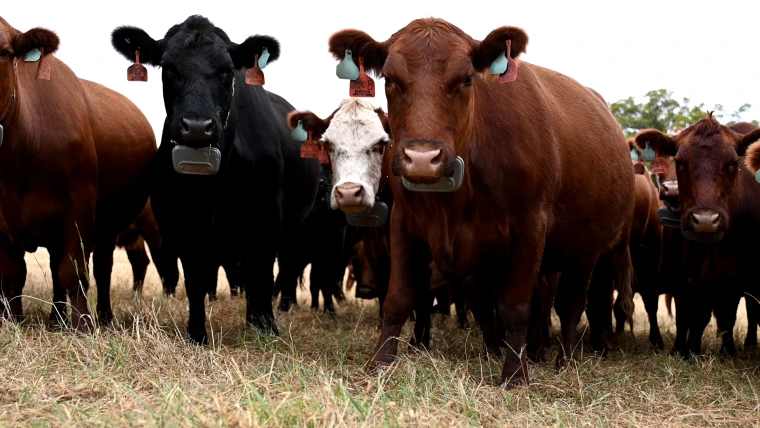
Just when you thought you'd heard everything about virtual fence, another podcast episode comes along. But Dr. Flavie Audoin, University of Arizona Cooperative Extension rangeland specialist, may be one of the most importance "voices" to listen to on the strengths and weaknesses of virtual fence and animal geolocation technologies. She has been in the middle of much of the early vendor comparison work as well as experimental research on animal physiology considerations and environmental applications for remote animal location detection and control. Listen to this interview to learn about the mechanisms of virtual fence options, a comparison and contrast of features on offer, and current research on graziers can better manage wild, open spaces with a back-to-the-future approach to modern herding.
The Art of Range Podcast is supported by the Western Extension Risk Management Education Center, Vence (a subsidiary of Merck), and the Idaho Rangeland Resources Commission.
Music by Lewis Roise.
Transcript
[MUSIC]
Tip Hudson: Welcome to The Art of Range, a podcast focused on Rangelands and the people who manage them. I'm your host, Tip Hudson, Range and Livestock Specialist with Washington State University Extension. The goal of this podcast is education and conservation through conversation. Find us online at artofrange.com. Welcome back to the Art of Range. My guest today on the podcast is Dr. Flavie Audoin, and I still don't think I got that quite right. Flavie is an extension livestock and Range specialist with the University of Arizona who knows as much about virtual fence right now as anybody out there. We have done on the podcast a few pieces about applications for virtual fence and some of the, I guess, hoped for benefits of virtual fence, but we really haven't done an overview of these various technologies and how they work. Part of what I want to mention here and get to is that so called virtual fence is only one of them. That maybe there are some smart people who think the term and the concept of virtual fence limits our thinking about what we really want to accomplish and what we could do with some of these animal geolocation and control technologies. Flavie is definitely in tune with the research that's being done and has a lot of experience with all aspects of virtual fence. Flavie, welcome to the show.
Flavie Audoin: Hi, Tip. Thank you so much for having me.
Tip Hudson: The beginning is always a good place to start, so tell me about your childhood. Well, maybe just the end of childhood when you began thinking about what you were going to do next. Where did you grow up, and how did you end up in this social sphere of rangelands and livestock? How do you actually pronounce your last name?
Flavie Audoin: Well, that's an unexpected question. It might take me a while to get back to my childhood. Yes, my name is Flavie Audoin. As you can hear, I have a pretty strong accent, so I'm not from the US. I'm from France, and I am from a farming background. I've been always around animals since I was born. My real objective in life was to become a vet for horses since I was young, and then I was not that good at school, so I had to find another pass, and I ended up doing engineering degree which we call here, a master's degree in breeding and system of production. Through that master's degree, I was able to do three months internship in the US to work on my English. I contacted a rancher that was in Southeastern Arizona to see if he would be able to take me on for that. He said, and I just wanted to go to the Wild West and have the experience of being a cowgirl, which I've been tested on that, so now I'm good to go. Then I went back to France, and I had a six months research internship that I needed to do in France, and I really did not want to do it in France because I loved my first experience in Arizona, so I came back, working with this rancher and looking at the breed of cattle that he was raising, which are Criollo cattle, and we were looking at meat quality. I went back to France, got my masters, and then for a year, I worked as extension agent for beef producers, but we don't really have an extension system in France. Ranchers actually have to pay for the service of extension. I was able to help them with their pasture management, their breeding programs, some stuff related to taxes. It was pretty interesting. But the way the company changed their way of doing things. They wanted me to sell more hours to farmers, and I know how hard farmers or ranchers work, and they don't know get paid for their hard work. I didn't feel like it was something I wanted to get into. In the background, the rancher that I had worked with for those two internships put a big PhD project for me together, and I said, well, why not? It's a unique experience and I took on the challenge. I came back to Arizona in 2016 and ended up my PhD in '22. I was looking at grazing behavior, diet selection, and meat quality of those Criollo cattle in Southeastern Arizona. My major advisor was Doctor George Roll. We worked where I am now at the University of Arizona, so I work for the School of Natural Resources and the Environment and Cooperative Extension. That's the background on why I'm here. Somehow, I also I forgot to mention that I worked for a year at the University of California Cooperative Extension, right after my PhD as an advisor there. It was a wonderful experience. I got to meet awesome colleagues, which I'm always in touch with them, and that's how I got exposed to virtual fence mainly with my experience in California because there were some projects going on there. Then when I came back to Arizona, all of those virtual fence projects just started flooding my life. So I sleep, eat, and dream virtual fence all day long. It's been an adventure, but it's been pretty exciting.
Tip Hudson: That doesn't sound as tasty as French wine.
Flavie Audoin: It's not, believe me.
Tip Hudson: Was that rancher Dennis Moroni?
Flavie Audoin: Yes, that was him.
Tip Hudson: I wasn't. Yeah, I would like to visit with him about the Criollo cattle. Well, let's get into virtual fence. We keep using that term, and because that has emerged, then I don't know that I know where the term came from. The concept of virtual fence has been around since the 1980s. Karen Launchbaugh talked about that some time ago. But I do think I agree with her that that term maybe limits our thinking on what could be done. But there are, I guess, I would call animal geolocation technologies out there that are not attempting to make an animal go here or not go there. Is there a good term for this whole constellation of technologies. What all is out there?
Flavie Audoin: Yeah, I might not be the best person to answer that question, but to me broadly speaking, we're talking about precision livestock management technologies, and there are two types right now, and that might change in the future because of how quick technology changes and evolves. We have the location only systems, which are right now ear tags that you can put on your cattle, and then you have the animal location control system, which we call virtual fence. The locations only systems are basically a decision support tool that are going to help you find your cattle, monitor their movement patterns, and you can receive alerts if you have animals that move outside of a defined area, but they do not influence the behavior of the cattle. You have no control over that. Then you have virtual fence, where you're able to track the animal, but you're going to also be able to influence their movement. That's how I define those two type of technology. Actually, right now I'm testing those two types because ranchers are very in tune with new technologies right now, and they're interested in knowing where should I go virtual fence or should I go GPS or ear tag tracking location?
Tip Hudson: Yeah, I suspect that most listeners are familiar with the general mechanics behind virtual fence because this is getting to be not quite so new, but I think it would be worth spending just a minute here to describe just the general structure from an engineering perspective on how both the geolocation technologies work and also how virtual fence systems or location control systems direct a cow. Can you describe the overview of how they function?
Flavie Audoin: Yes. I'm going to start by a definition of virtual fence first. Even if most people by now should understand that's what it is for. Virtual fence is a management tool that uses invisible barriers that you're going to establish using the GPS coordinates, and that's going to influence your livestock movement with a combination of auditory and electrical cues. For a virtual fence system to work, you need three main components that are a software interface, collars that are going to be worn by livestock. In the future, those collars may end up not being collars. We have the University of Idaho with Karen Launchbaugh that are trying to figure out ear tags that can do virtual fence as well. Then you need for some companies, you're going to have to use base station or others, you're going to use sitter or tower. So once you have all of those elements, you're going to have to train your animal to the technology. I don't know, are you familiar with the Pavlov concept tip?
Tip Hudson: Yes, I am.
Flavie Audoin: Yeah. If I just quickly explain how we do virtual fence, how you're going to train your animals. We're focusing on cattle, but we can use virtual fence on sheep and goods as well. Let's say you have a dog and you have a ringing bell, that dog is not going to respond to that ringing bell. But if you bring a bowl of dog food in front of that dog, that dog is going to start salivating.
Tip Hudson: Associate the reward with the cue.
Flavie Audoin: Yes. Then when you train that dog and you have that bowl of dog food, and you add that ringing bell, then it's going to salivate. Once you remove that bowl of dog food, if you ring that bell, the dog should start salivating. Now if we talk about virtual fence, if you have a sound, so auditory cue coming to a cow, she's not going to do anything. But if you have an electrical cue for an electric fence, that cow is going to try to avoid that area because it hurts a little bit. Then when you do your training with virtual fence to that electric cue, you add that sound, and then that cow is going to be able to understand that, if I hear that sound, I may get that electric cue, so I should avoid that area. That's how they learn, and it's pretty impressive on how quickly livestock learned that technology. I just started a project last year on sheep, and I love sheep, but they have a bad reputation of not being the smartest livestock out there.
Tip Hudson: But is it deserved? That's the question.
Flavie Audoin: Well, not with virtual fence. Actually, they did so good that I was very proud of them. So they can do it. We should give them credit for that. That's how virtual fence works. Then if we talk about the GPS, ear tag tracking system, you have different companies and they have different systems. There is mainly three options when you think about those. You have tags that are going to be based of cell service, tags that are going to be needing a base station. That's the same exact thing as virtual fence. But then in the ear tag technology right now, we also have satellite options, which we don't have yet in virtual fence. That's the quick overview I can give you about virtual fence and the ear tags.
Tip Hudson: Yeah. Yeah, I learned quick in response to electrical shock, as well, but it doesn't make me salivate.
Flavie Audoin: No, I'm sorry. [LAUGHTER]
Tip Hudson: I think I know of some of the companies out there that are offering the geolocation only. I realize there's a risk of missing some, but I do want to just mention them because folks may be familiar with some of these names but don't know what category that they fit in or what they might do with them. What are some of the companies that are offering geolocation tags right now?
Flavie Audoin: I'm familiar with four. We have movement, which is one that I think just work with base station, and that's going to give you mainly location information. Then we have the three other companies I'm going to mention, I'm actually testing them on the on a ranch right now. I actually volunteered Dennis Moroni to be a partner in that research. It's the cows that are my guinea pigs. We have Ceres. They have a satellite option, and you know how technology goes fast. I bought some tags in November, and they just came out with a new version two weeks ago. I'm not using right now the most up to date version, but Ceres is going to give you the location. You can geofence your animal so if they go out, you're going to get notification that they got out. They give you some type of information on pasture intake and they're going towards methane emissions information, which I don't know yet how accurate it is in our Western rangelands.
Flavie Audoin: Then there is LoneStar, and LoneStar is the most basic option. It can be satellite, and they just give you location. Nothing else. You do location, you can potentially do some of those geofencing, but you only get the location with them. Then we have 701X, which is one that has the most information, I would say, and they do offer, I think, base station satellite and cell service with those. For those, they're the only one that you have an option. If you have a cow that has a calf on her, you can actually also put a tag on the calf, and you see where the calves are. Those that company gives you actually has a heart rate monitor in a tag. Which gives you some report on the stress level of your animal, so then you're going to get notification, all your animal is in high alert or it's slow, it's not behaving normally. It also gives you some information when you have a cow that seems to be in heat. You get notification that that cow is going to be in heat, and all of those tags are solar powered. That's the four I know of, and I'm sure there is more out there. I'm just testing the last one I mentioned because they're satellite-based, and that's mostly what the producer want to test right now in Arizona.
Tip Hudson: There's one more that I know about that I just put in the chat in our little recording window here, GSAT Solar. I know about them because they made contact with me when they were in the state, I don't know, a year and a half ago or so. Sounds very similar. It looks very similar. They're small solar-powered tags that can go in the ear. They're out of Australia as well.
Flavie Audoin: Yes, it's the same design as the LoneStar.
Tip Hudson: Got it.
Flavie Audoin: Interesting.
Tip Hudson: Now, what are the current offerings for virtual fence or animal location control where it's not just location plus alerts? It's trying to tell the animal to stay inside of or away from some geospatial boundary.
Flavie Audoin: Do you want me to go in? I have a lot of details for those. We have right now four companies that are available in the US, and I'm going to organize them alphabetically, not necessarily by preference.
Tip Hudson: Nice.
Flavie Audoin: Even if I have my own preferences. [LAUGHTER] But so we have Gallagher, and they're also known as A-Shepherd neck bends. It's a New Zealand company. They entered the market here in spring 2024. They're only for cattle, so they don't plan to work on small ruminants. Wisdom, the neck bends are purchased. It's the only company that collars neckbands. I'm going to use neckbands because that's what they do. They are purchase warranty of three years, and Wisdom, you have the option to have a deferred payment available, so you don't have necessarily to have to pay everything at first. They're solar powered and estimated to last for 7-10 years, but has not been yet checked or tested in the US because they are so new. It's the only company that has two options with base station and cell service. Their pay station covers up to four miles radius, and that's going to be depending on the topography of the ranch. It's not always the same depending on where you live and where you run your cattle.
Tip Hudson: Just to clarify, you mean that the individual collars or neckbands communicate directly with cellular as opposed to going through a tower or an antenna somewhere?
Flavie Audoin: Yes.
Tip Hudson: That's one of the options.
Flavie Audoin: That's one of the options. They have cell service, and they have those base station that you have to deploy on your ranch if you don't have good cell coverage. Ultimately, we don't have satellite yet in virtual fence, but that's the two option. If you have good cell service, you have companies that are going to be great with cell service only, so you don't need extra hardware to deploy on your ranch. But if you don't have good cell service, then you're going to have to work with companies that have base station that you're going to have to deploy on your ranch. It's often you have to put them on the highest peak of your ranch, which is often not the most accessible place for you.
Tip Hudson: Got it.
Flavie Audoin: Gallagher is the biggest collar on the market right now and the heaviest. We're looking at 5.9 pounds. They have a software that's available on computer, and on your phone.
Tip Hudson: The solar is powered, right?
Flavie Audoin: Yes.
Tip Hudson: It is solar powered.
Flavie Audoin: You do not have access to the batteries, so you don't get to touch the batteries. It's just solar powered and supposed to last up to 7-10 years. Everything I'm telling you tip today is going to change once we're done recording. Because I did a presentation like this at the Society for Ranch Management last week in California, and I made that statement to the audience said, What I'm telling you right now might change just right after my talk. There was a company, virtual fence Company, in the room, and yes, they came to see me and said they had changed something. [LAUGHTER] It's only good as of today.
Tip Hudson: Got it.
Flavie Audoin: For Gallagher, you have to have at least 20 animals to work with them. Then I don't know if I want to go into the details of pricing. We may go over that later on.
Tip Hudson: We can also direct people. We can put some links in the show notes, both to the website and publications that you've put up that compare them and allow you to make some calculations on cost, and then people can go look at that on their own as well. Because that will also change by the time this gets released from the time we're recording.
Flavie Audoin: I try to stay up to date with everything, and the companies are pretty good at giving me the updates. We just released updated table in February, but we know there is changes coming, and we'll lease a new cooperative table in March.
Tip Hudson: We'll put the link in the show notes, maybe just call it out now. What is that website? This is the one on the Ranchlands Partnership site.
Flavie Audoin: Yes. We have a virtual fence user guide on the Ranchlands Gateway website, and the address is ranchlandsgateway.org/vf. On that user guide, you have extension pubs, videos from different universities. It's not necessarily just the University of Arizona. We have some webinars that are recorded, and we have a comparative table that compares those companies with cost and everything. I think that's the one that I get a lot of calls from because that's an easy thing to look at. You have the information that you need to know, and then you can reach out to the companies that you may be interested in. I just want to point out that table was designed by my colleague Amber Dolke from the University of Arizona. She doesn't like to take credit for it, but I'm giving it to her now. Then we work together to brainstorm on how best we can communicate the information we want to put in, and then we just keep updated it as we go.
Tip Hudson: It's a very nice website, easy to understand. Visually appealing. I use it all the time, and I don't use very many of those websites. It's really good. It's worth looking at.
Flavie Audoin: Thank you for that. That's good to hear.
Tip Hudson: Now we can move on.
Flavie Audoin: Yes. We've talked about Gallagher. Now I'm going to talk about Halter, which is also a New Zealand company. Their collars are available since summer 2024. They're only for cattle, and they're not planning to work on small ruminants. You don't purchase the collars like you were doing with Gallagher, but you have to enter into a three-years contract with them. It's also a solar-powered collar that's estimated to last for five years, and that's the lifetime warranty for it. It's the only company that has a stimulation on the left and the right side of the collar, which is going to help your cows understand better how to move with the technology. They also have a vibration mode that when you design a new virtual fence line, if an animal looks at that specific new virtual fence line, it's going to receive a vibration that's going to say, Hey, you should go forward. That's pretty cool tool.
Tip Hudson: Is the directional movement I presume controlled by the user somehow. I'm imagining somebody sitting [LAUGHTER] at their office with a joystick or something steering the whole herd left or right. Is that actually how that would work?
Flavie Audoin: No. They have an artificial intelligence system in their collar.
Tip Hudson: As they approach a virtual boundary, depending on their angle of approach, it pushes them away selectively, is that?
Tip Hudson: Let's say you have a cow that's in a corn virtual fence, and you design another virtual fence in front of her. She's grazing right now, so she's not paying attention to it, but as soon as she's going to put her head up, and just because she's looking in the right direction, she's going to receive that vibration that say, Hey, there is new feed out there. You should go.
Tip Hudson: Got it. That's really interesting.
Flavie Audoin: Their AI system, and so we're talking about artificial intelligence in that case. If you have a cow that's a little bit stubborn, doesn't respect the virtual boundary very well, she may get more cues than a cow that's just the perfect student.
Tip Hudson: Very interesting.
Flavie Audoin: It's a cool feature, and they're the only one that right now say that you can put their collars on animals over eight months old. Most of the other companies want to make sure that you have mature animals to learn technology.
Tip Hudson: Is that because of their brain and their ability to learn, or is it because their body size is continuing to increase and it's difficult to get the thing fitted correctly?
Flavie Audoin: I would say, if we compare to humans, when you're a kid, you don't learn as quickly, maybe as when you get older, so that may be due to that. That's a good question because every company, if you put collars on an animal. I've been keeping talking about cows, but we couldn't put it on heifers and steers. If it's a heifer or steer, actually, it's an animal that potentially is going to put more weight on. It's going to grow, which you have to be careful when you're going to fit that collar because you have to protect what's going to happen with the body weight of your animals to make sure that you put them on today, but in six months, if they're getting a lot of pounds, then you don't want the collars to be too tight. Every company usually says you need to check the fitting every 6-8 weeks. It's really hard to do that in the western US because ranchers don't usually see their animals every 6-8 weeks, or they might see part of it, but not all of them. That's something I always say to ranchers, it's better to put it to loose and lose it because you can find it than put it too tight, and then you may lose an animal. You have to see that, and I'm thinking that maybe for why Halter says we can put them on younger animals is because of their design. Might be a little bit different than other collars. The Gallagher collars are pretty big and heavy, so you don't want to put that on a younger animal. Halter, their collars weigh 2.7 pounds. They have a counterweight at the bottom that's a little bit smaller than some other designs. That may be why, but I really don't necessarily know.
Tip Hudson: What's next moving down the alphabet?
Flavie Audoin: We have, then, Nofence. Nofence is from Norway. It's been available in the US since spring 2024. It's the only company right now that does it for cattle and small ruminants. You buy the collars. The warranty is five years, and they're estimated to last 5-10 years. The collar cattle is around is 3.2 pounds. This company only works with cell service, so you need cell service to work with them. You need at least five animals to be able to work with them. That's a pretty straightforward thing. Because with a Halter, you need at least 50 collars to be able to work with them. That's the quick overview with Nofence. They're solar-powered, but you actually have access to the battery. You may need sometimes to charge the battery and then put it back in the collar. Halter and Gallagher, you don't get to touch the battery. Then the next one is Vance, which is the only American company and owned by Merck Animal Health. The collars were available in the US in 2021.
Flavie Audoin: At this time, it's only for cattle, but research on other species. The colors for them are lease, so you don't buy the colors. That means if they come with a new design, they're going to send you new colors for free. It's the only color that's not solar powered, so you have to change single use battery they say 6-9 months and they're trying to do a new design to increase the life batteries because some ranchers may work their cows just once a year, so then vents cannot really work for them. They're the company with the best coverage with their base station, it can go up to nine miles. You need to buy less base stations compared to Halter and Gallagher and that's going to change soon with Halter, but I'm not allowed to talk about that yet. But they're a little bit more expensive because they can cover more. the weight of the collar is 2.5 pounds, and right now you need at least 100 animals to work with them. That's the quick overview on all of those. Now they all have mobile apps. Some are easier to use to draw fences. Some are you just look at it, but you really have to use your computer to do things. Then we have another company that's coming into the market. It's called Monil, and they're also from Norway. They asked me to test their technology in Arizona, so we should be doing that in April. I don't know yet when they will be commercially available here in the US, but they're on their way here. I'm sure, we're going to see new companies every year, maybe.
Tip Hudson: I had not heard of them. How do you spell that?
Flavie Audoin: Monil is M-O-N-I-L. They did their big reveal at the CattleCon here in Nasheville in early February.
Tip Hudson: You mentioned that you have some active research on these. What research are you doing and what other research are you aware of that's being done on the variety of I mean, there could be 1 million things out there. There's, interactions with animal physiology, applications for virtual fence, selective breeding based on animal distribution. Some of these things we've talked about on the podcast before, but what are you directly involved in and what interests you?
Flavie Audoin: ]You're right. There's a lot of research going on. A lot of universities are testing virtual fence for different reasons. Right now I'm involved with a team at the university, and with that team, I'm doing two projects right now with cattle only with two different companies, and we're looking at passive capture with virtual fence. Trying to use virtual fence boundaries to help you gather your herd. We're looking at livestock distribution. We're also looking at exclusion from threatened and endangered species area. Looking at, [ inaudible ] to do a better job at grazing management, and we also are going to start a project on animal welfare. That's the type of research we're doing with cattle. I on my own, I'm doing some targeted grazing studies with I should say targeted grazing study at this point, with sheep and I'm planning to do some with goats, as well. That's what I have right now, and I'm going to test that new company, and that new company will be more for targeted grazing and just, grazing management and using the virtual fence as cross fencing instead of having to build a physical fence.
Tip Hudson: What is some other research that you've heard about that's being done elsewhere that you think is interesting or that people should pay attention to, if anything?
Flavie Audoin: I would say that any type of targeted grazing research has been done for control of invasive species or wildfire. Prevention is super important right now because we know that wildfire risks are increasing in the western US. I know that the University of California is doing a fair amount of research on that. We also have, I think it was in Nevada that's doing some. It's also something that, when you talk to ranchers and figure out how they're going to use their virtual fence technology, you have some ranchers that say, well, if those cattle don't answer to the technology, I'm going to get rid of them. Then comes into consideration, genetics, how a specific breed or specific lineage of an animal is going to react to the virtual fence. Is it a good way to call animals or you should consider other things. I know that we have some interests in the state of Arizona, and I'm going to try to work on that with those ranchers is to look at genetic and breeding with virtual fence. But I would say talking grazing is definitely something that's very useful. The virtual fence, because it's technology, you can always have failure, but we all know that the general public is not necessarily in favor of cattle grazing on the landscape because of different reasons. By using virtual fence to try to do maybe a better job under certain circumstances may help, mitigate some potential conflict with the general public that, our cattle are actually out of this area when it's needed. By having virtual fence, we can replace potentially delete cross fencing, which is going to be better for wildlife corridors.
Tip Hudson: I like that idea. I think in my mind, that's one of the main hoped for applications of virtual fence, somebody that I heard last year at SRM, I can see his fakes and I can't pull his name up right now, said that we likely would have the ability to paint landscapes using livestock so that you're applying in a more surgical manner. Herbivory that has significant benefits, but successfully avoid heavier grazing in places where we don't want it. We can have the benefits without the downsides that sometimes prevent doing more creative things. I think there are lots of applications like fuel reduction, where there really is no other good option except to convert that fuel into food using livestock. But we don't do it, because in the past, maybe it wasn't logistically feasible or there were things like, as you mentioned, T&E species that we wanted to avoid, now we have the ability, assuming we can get water to the places where animals are to do that in a much more strategic manner.
Flavie Audoin: I completely agree with you. Yes, water is essential in that system. We need to make sure that cattle, even with the technology still have access to water. But you can just think about, the fuel break reduction just around a highway. You can decide, let's do 1,000 feet of very intense grazing to prevent a wildfire. We're actually trying to do that with the Tonto National Forest on a project. When I mentioned my ship project, it was mostly doing that invasive species, but it was for fuel control in urban area. We would not have done as a good job without the virtual fence technology, because you can apply very specific grazing pressure with the technology, which you cannot necessarily do when they have more space.
Tip Hudson: Is there anything that has surprised you in working with virtual fence, either in terms of how things worked or the applications or something that didn't work that people should think about?
Flavie Audoin: I would say that right now the only company I've not really yet completely worked with is Gallagher. But I've been working with three other companies. I like companies that listen to user feedback to improve their product. I've been impressed with a few companies that, if I say something is wrong, something is not working, they're going to look into it and fix it. Great. I'm a researcher and it's great for me, but they're also listening to the producers on the ground using the technology, and I think that's how, we should do it because it's the producer day to day life to do that. Not being afraid of complaining. I know as a French person, we have a bad reputation with the American people, but, if something doesn't work, well, bring it up to them, and if they can fix it, they will fix it. I do think that what I would like to see in the future, because right now, when you think about deploying base stations, in our rough country, it's hard. If you graze on public lands, then you have to enter into a NIPA to see if you can do it. It becomes cumbersome sometimes. If we could go the satellite route, I think it would make it easier for ranchers to use it because of less infrastructure. But I have to say some companies, you pull your phone out. You can see where your animals are and you can fix things on your phone. Every company, if they could, should definitely have app because it's easier for a wrench or a cowboy to be horseback with a phone than a computer. Trying to make it user friendly to the producer is very important. I say, you asked me if I had notice issues. On my project that I did with the sheep, so we had a backup plan because I should say that, it's not because you're using virtual fence that you can get rid of all of your physical fences. It's still a technology that can fail, and so you need backup. Otherwise, you may get in trouble. But so that happened to me on my project with the sheep. We were at the end of the project. We had [ inaudible ] all over the place plus the virtual fence to make smaller paddocks. At the end, the batteries run out on the collars, and we did not want to gather the ship to change the batteries because we had, like, one week left. If we didn't have that backup, we would not have done that if we did not have the electron in, but if you did not have that backup, the ship may have been ending in downtown Tucson at the bar, and that would not have looked too good for that project. Technology sometimes can have issues. With self service, sometimes you don't have self service, so the callers may not receive what they're supposed to receive. You have to be aware of that. That's not a bump proof system. It's a tool that you can use, and it's like, physical fencing is not a bum proof system. You have to sometimes go fix them. It's a very unique tool, and I think it can be a game changer in the Western rangelands, but there is still some things to consider when you go that route.
Tip Hudson: That reminds me of one of the questions I was meaning to ask you but didn't make a note of. What is the delay between the device on an animal detecting a movement and that being reported through to whatever interface a person's using for Netware that shows them where the animals are. You mentioned that one or maybe a couple of the geolocation only ear tags have alert systems. I'm aware that it uses quite a bit of battery or power to turn on the GPS and register a location frequently. What is the frequency of the active geolocation and what does that look like in terms of a lag time to the person who's trying to see it? How do you know?
Flavie Audoin: I'm not sure. It's going to depend on companies, so it may be 5-15 minutes. It's going- it's a hard one to answer. I know that the tags I'm testing right now, they're satellite based, so the only information I get is every six hours. It's not real time data because it's satellite and you don't have that big of batteries, as you said. With virtual fence, you get locations more often than with the satellite tags.
Tip Hudson: Because the device has to know where it is relative to the geospatial boundary.
Flavie Audoin: Wait, repeat that?
Tip Hudson: Tell me if I'm understanding that right. You would have to have frequent enough location inside the device itself so that it knows where it is relative to the geospatial boundary.
Flavie Audoin: Yes, that's correct.
Tip Hudson: Speaking of the bar, one of the objections that's been raised against virtual fence is that now people can just sit at the bar and twiddle on their three inch screen and manage their herd. I don't think that's the way it will go. I don't think it will replace the cowboy, and we've done a few interviews on this podcast with people who would say it actually enables the cowboy or the cowgirl to do their job better. It's not a replacement. That's where I'm coming to it from. But what is your impression now that there are various systems that have been out for a little while?
Tip Hudson: I would agree with everything you just said. Virtual fence is not going to replace the cowboy or cowgirl. You still need to have boots on the ground. Obviously, with the technology, it's going to help you find your animals faster, and that's truly a big deal in rough country. The first thing that ranchers are going to tell you is that I know where my cattle are. I know where they are and I'm gaining a lot of time. But at the same time, even with the virtual fence location, you can be on your horse and don't see the animal because of the vegetation. It can still be challenging, but it does not replace the observation that you're going to have on your animals to see if they're healthy, if they're in good shape. It doesn't replace eyes on the rangeland to see if it's time to move your cows around. Yes, it's going to shift your labor tasks for your cowboys or your ranch workers because you're not going to have to fix fences as much, but you still need people on the ground to check on your herd, for sure.
Tip Hudson: That also makes me think of the various possibilities that I've seen advertised about moving the animals using virtual fence systems. At the moment, it seems like we're often talking about moving from pasture to pasture. I'm curious about that. I talked to a fellow in California a few days ago, who's a halter user and was saying one of the benefits of using virtual fence, for lack of a better term, is that you don't have to use the same boundaries every time. We draw a polygon and you graze here, but when we come back around next year to that same area, we may have learned something about where the animals should have gone because we have so many existing hard fence boundaries are often following ownership lines or whatever that have no relationship to animal movement. I think one of the exciting things is being able to totally rethink where should animals go and what are those boundaries, and how big are they? Where could animals go? I think there's two questions there. Sorry about the ramble. One of them is what have you seen in terms of the various systems ability to move animals from one place to the next? At the moment, it seems like that has been characterized as what we would call a pasture move, where you're going from one discrete area to another discrete area with no overlap. Then the other question is, have you seen people that are trying to use this more in, I guess, a shepherding fashion, where there are not hard boundaries that we're working inside of? Maybe now we're using virtual fence to do cross fencing inside of existing permanent pastures, but in places where there are no fences, what does it look like to move the animals in a way that isn't stuck inside of that paradigm? I feel like I just threw too many words at that, but did my questions make sense?
Flavie Audoin: Yeah, I think so. I would say you can move animal to some extent because it's a tough one in rough landscapes. The person that talked to you about halter, when you do the training with halter, they really want you to move the cattle every day for them to learn the technology pretty quickly and it can be a challenge when you have big landscapes. But something I want to start with first is that you have your animals in a virtual fence one day, and they know the limits. Then the next day, you may increase or change the boundaries. It's pretty interesting if you have the option to go out and look at their behavior. Some animals are reluctant to go forward because they know that's where the boundary was, and it's going to take them some time to figure out, it's actually open now, I should go through it. There is some learning there where animals may be putting the brake on to not get those cues. I'm trying to rethink through all of what you mentioned.
Tip Hudson: No, it's fine. One question is, what are the current capabilities of the various virtual fence companies to move animals? I'm envisioning it the way we would do an electric fence except with an electric fence, you've got a visual cue, which I think helps the animals know that it's open, where you would open a front fence and then as the animals begin to move up a back fence and do a gradual move from one place to another, or that's just how you're moving across a landscape is by that stairstep, staggered, changing fence boundaries. What are the capabilities currently of doing that using virtual fence?
Flavie Audoin: You can do that, but it's not going to be as quick as moving an electric fence because of that visual cue and you being there. You can set up different paddocks that they can drift to, but they're going to find it on their own, except with that vibration mode on the halter, of course, that guide them. The other companies don't have that, so you have to have the animals just wander around grazing and figuring out, now I can go forward. I've been talking with the companies to say, hey, is there an option in case of a wildfire? Flooding is not of a concern in the Western US, but in case of a wildfire, if someone has collars on, can they actually just gather their herd with the technology because you have to be quick. They don't recommend that because they don't know if it would work right now. You can do it, but it's more passive than active, I would say, at this point.
Tip Hudson: One of the recommendations that I've gotten from a rancher in Washington State who's been using a couple of these is that it would be useful to have something like a local kill switch. For example, if you're out on horse back moving a herd that has a virtual fence system on them, and something goes sideways and you see that some virtual fence boundary is preventing animals from moving where you want them to go, it would be useful if there was some way to just turn off locally every device so that it's not giving animals a cue to not go where you want them to go. I don't even know technologically, whether or how that's possible, but it's one of the recommendations that I've heard.
Flavie Audoin: That's not the first time I hear that. Some of the companies, actually, you can just select a specific animal and turn off that collar or move that collar out of the boundary. But it's not necessarily in a second. It might take some time to connect, but it's possible with some. I've heard stories of cowboys trying to move the cows, and they're getting the cues and they don't want to go, and it's like, well, you're on horse back, you want them to go forward. It can become challenging. If you do a big move, you anticipate your move, but yeah. If you go to specifically see one animal that's not doing too well, you may have to wait a little bit on your horse or take nap while it's updating the information.
Tip Hudson: One more question and then I do want to ask you about the PhD position that you have open right now. One of the other concerns that has been expressed about virtual fence is who owns the location data, and in particular on public lands where there's, in some cases, more controversy over where animals go? Who is it? Have you seen any issues with that? Is that a fear that has come to fruition anywhere? What are you seeing in terms of the messaging from the various companies about who's responsible for that data?
Flavie Audoin: That's a common question. If the rancher has the ownership of the collars, they own the data. It becomes more tricky when you work with the Forest or BLM, and they may buy base stations for ranchers, but they only have the base stations so they don't have access to the data. If a rancher wants to work with an agency, they need to make sure they buy the collars if they want to own the data. Then each company on their app, when you're the rancher, you can give access to anyone you want to the app. The rancher is in charge of telling who gets access to the data.
Tip Hudson: Before we run out of time, I would like to let you advertise this PhD position because this sounds interesting, and in a different life, I would be interested.
Flavie Audoin: You're more than welcome to join me for another PhD. Thank you for that opportunity tip. I'm looking for a PhD researcher to work on virtual fencing and range in livestock systems. That would be a project that will be looking at seasonal and reproductive stage differences in grazing behavior, as well as cattle stress and welfare responses associated with interaction with the halter virtual fence system. This project is done on the Santa Rita Experimental Range, which is the oldest experimental range in the US. You need to apply by April 15. The best started would be in the summer, but we can start in fall 26, and there is salary and benefits for up to five years.
Tip Hudson: That's exciting. I just saw that notification come through. Well, I hope that we maybe get this out to a few people that would be interested. That seems like a really interesting opportunity.
Flavie Audoin: For the welfare, I might just say that we're actually going to put heart rate monitors in some cows instead of using heart rate monitors that are external. That's the novel part of the research.
Tip Hudson: Great. Well, did you have anything you wanted to say that I didn't ask about? Otherwise, we'll find a way to wrap this up.
Flavie Audoin: I'm going to maybe re-say some things I've said, but I want to say that virtual fence and GPS ear tags are not about replacing people, replacing cowboys or cowgirls or even turning a ranching into a video game you manage from your phone, they're about adding information and flexibility to systems that have always depended on timing, observation, and good judgment. To me, those precision livestock management technologies transform rangeland management from being reactive to being proactive.
Tip Hudson: I like that. I think that's an accurate and a welcome conclusion. Flavie, thank you for your time today. This was wonderful. [MUSIC]
Flavie Audoin: Well, thank you so much, Tip, for having me.
Tip Hudson: Thank you for listening to the Art of Range podcast. Links to websites or documents mentioned in each episode are available at artofrange.com, and be sure to subscribe to the show through Apple Podcasts, Podbean, Spotify, Stitcher, or your favorite podcasting app so that each new episode will automatically show up in your podcast feed. Just search for Art of Range. If you are not a social media addict, don't start now. If you are, please like or otherwise follow the Art of Range on Facebook, LinkedIn and X, formally Twitter. We value listener feedback. If you have questions or comments for us to address in a future episode or just want to let me know you're listening, send an email to show@artofrange.com. For more direct communication from me, sign up for a regular email from the podcast on the homepage at artofrange.com. This podcast is produced by CAHNRS Communications in the College of Agricultural Human and Natural Resource Sciences at Washington State University. The project is supported by the University of Arizona and funded by sponsors. If you're interested in being a sponsor, send an email to show@artofrange.com.
Speaker 1: The views, thoughts and opinions expressed by guests of this podcast are their own and does not imply Washington State University's endorsement.
The Rangelands Gateway Virtual Fence User Guide has everything you need to know about virtual fence -- mechanics, animal training, economics, vendor comparison, and more.
The PhD assistantship for virtual fence research at U of Arizona is open for applications through April 15, 2026. Instructions for applying are here.
For more information, you can contact Flavie directly through the contact information on her faculty page.